 人類學 人類學 |
| 走徑東海岸 — 與法籍神父的相遇
: La côte est de Taiwan, captivante et paisible: a la rencontre des missionnaires français
|
| 廖紫均, 劉一峰(Yves Moal)主編 |
西元 2026 年出版
/ NT$450
|
巴黎外方傳教會(MEP)是天主教歷史上最早全心投入海外福傳工作的傳教會之一。本書分為兩個部分,以深入淺出的方法,介紹巴黎外方傳教會傳教士五十多年來在臺灣奉獻與犧牲的事蹟。本書生動記錄了這些來自卓越傳教會、德行高尚的神父,在臺灣東部這片福傳沃土上所留下的光輝見證。
La Société des Missions Étrangères de Paris (MEP) est l'une des premières congrégations catholiques de l'histoire à s'être entièrement consacrée à l'évangélisation outre-mer.Cet ouvrage, structuré en deux sections distinctes, présente, de manière approfondie tout en restant accessible, le dévouement et les sacrifices des missionnaires des MEP ayant œuvré à Taïwan pendant plus de cinquante ans.Cet ouvrage singulier retrace le témoignage lumineux de prêtres vertueux issus d'une congrégation exemplaire, ayant œuvré dans une région propice de l'est de Taïwan. |

| 總類 |
| 自然未竟:國立自然科學博物館四十週年
: The 40th anniversary commemorative book of the National Museum of Natural Science
|
| 徐典裕 策劃;楊子睿 主編 |
西元 2026 年出版
/ NT$500
|
國立自然科學博物館(科博館)迎來四十週年。回首過去,由首任館長漢寶德先生奠定堅實基礎,歷經歷任館長與全體同仁的堅守與奉獻,科博館已成為全國科學教育與自然研究的重要領導機構。
近年來,科博館持續推動常設展廳更新。繼2024年推出全新常設展「奇幻自然」、2025年打造全臺首座近600坪的礦物常設展「大地瑰寶」後,2026年起亦將在教育部支持下全面更新生命科學廳,展現創新與永續的嶄新風貌。
展望未來,科博館將以「深耕在地,鏈結國際」為主軸,導入最新智慧科技,並深化「無牆博物館」理念。我們致力於成為大眾終身學習的殿堂,攜手社會各界,為下一代創造充滿科學啟發與人文關懷的未來。
As the National Museum of Natural Science (NMNS) celebrates its 40th anniversary, we reflect on a remarkable journey. Building upon the solid foundation established by its founding Director, Han Pao-Teh, and through the dedication of successive Directors and generations of staff, the Museum has grown into Taiwan's leading institution for science education and natural history research.
In recent years, the National Museum of Natural Science (NMNS) has continued to renew its permanent exhibition galleries. Following the opening of the new permanent exhibition "Nature's wonderland" in 2024 and "Earth's Treasures"—Taiwan's first permanent mineral exhibition, spanning nearly 2,000 square meters—in 2025, the Museum will undertake a comprehensive renewal of the Life Science Hall beginning in 2026 with the support of the Ministry of Education, demonstrating its ongoing commitment to innovation and sustainability.
Looking ahead, the National Museum of Natural Science (NMNS) will continue to advance its vision of “Deeply Rooted Locally, Connected Globally.” By embracing the latest smart technologies and further developing the concept of a “Museum Without Walls,” the Museum is committed to enriching lifelong learning for all. Together with partners across society, we aspire to create a future that inspires scientific curiosity and fosters humanistic values for generations to come. |

| 地質學 |
| 大地瑰寶:科博館礦物常設展的誕生
: Earth's Treasures: The Birth of the permanent mineral exhibition at the National Museum of Natural Science (NMNS)
|
| 何恭算;劉憶諄;陳君榮;王士偉;鍾坤煒 |
西元 2025 年出版
/ NT$800
|
在您翻開這本書的此刻,您不僅是開啟了一部關於礦物的百科全書,更是踏入了一場精心策劃的紙上展覽。這本書源自於國立自然科學博物館(科博館)籌備數十年、醞釀已久的「大地瑰寶」礦物常設展。然而,展廳中璀璨的晶體與精煉的圖文,僅是冰山一角;那些深藏在展品背後的故事:關於蒐藏的篳路藍縷、關於策展的理念轉折、關於礦物本身的深奧科學,以及它們與人類文明的深刻連結,是本書希望為您完整呈獻的核心。
這本書該如何閱讀?我們建議您將其視為一趟具有層次感的深度導覽,全書的架構,從策展理念的「解構」到科學知識的「解讀」,旨在引導您從宏觀到微觀,從歷史到當下,完整地認識礦物學的迷人世界。
本書的第一部分:「解構大地瑰寶」,是進入礦物殿堂的序曲。它回答了兩個最根本的問題:這座展廳「為何」與「如何」誕生?
當您理解了展覽的「身世」後,本書的第二部分:「解讀大地瑰寶」,將正式帶您潛入礦物學的汪洋。1. 〈礦物演化:地球礦物多樣性的奧秘〉2. 〈礦物無所不在:一趟深入結晶原鄉之旅〉3. 〈晶體對稱之美:探索礦物世界的內在秩序與萬千形態〉4. 〈晶體色澤之美:解析礦物世界的絢麗色彩〉5. 〈臺灣寶藏:一座島嶼的礦產奇緣〉6. 〈礦物世界:大自然的縮影〉7. 〈大地瑰寶:礦物與人類生活的交響曲〉這7篇文章,是深入展廳核心知識的鎖鑰。
閱讀本書,您可以依循上述篇章順序,從策展的「幕後」走向科學的「臺前」,再從宏觀的宇宙演化,一路聚焦到微觀的晶體結構,最終回歸於與我們生活交織的文明史。您也可以將本書做為參觀「大地瑰寶」常設展的最佳伴侶,帶著書中的知識走入展廳,您所看見的,將不再只是靜默的礦物,而是一部部濃縮了地球億萬年歷史、秩序井然的立體史詩。
At the moment you open this book, you are not merely opening an encyclopedia about minerals, but stepping into a meticulously curated exhibition on paper. This book originates from the "Earth's Treasures" permanent mineral exhibition at the National Museum of Natural Science (NMNS), which has been in preparation for decades. However, the dazzling crystals and refined text in the exhibition hall are just the tip of the iceberg. The stories hidden behind the exhibits—the hardships of building the collection, the shifts in curatorial concepts, the profound science of the minerals themselves, and their deep connection with human civilization—are the core essence this book hopes to present to you in full.
How should this book be read? We suggest you view it as a layered, in-depth guided tour. The structure of the book—from the "deconstruction" of curatorial concepts to the "interpretation" of scientific knowledge—aims to guide you from the macroscopic to the microscopic, and from history to the present, providing a complete understanding of the fascinating world of mineralogy.
The first part of the book, "Deconstructing Earth's Treasures," serves as the overture to entering the hall of minerals. It answers two fundamental questions: "Why" and "How" was this exhibition hall born?
Once you understand the "life story" of the exhibition, the second part of the book, "Interpreting Earth's Treasures," will officially take you into the vast ocean of mineralogy. 1. "Mineral Evolution: The Mystery of Earth's Mineral Diversity." 2. "Minerals are Everywhere: A Journey into the Homeland of Crystals" 3. "The Beauty of Crystal Symmetry: Exploring the Inner Order and Myriad Forms of the Mineral World" 4. "The Beauty of Crystal Color: Analyzing the Brilliant Colors of the Mineral World." 5. "Taiwan's Treasures: The Mineral Miracles of an Island" 6. "The Mineral World: A Microcosm of Nature" 7. "Earth's Treasures: A Symphony of Minerals and Human Life" . These seven articles are the keys to unlocking the core knowledge of the exhibition hall.
Reading this book, you can follow the order of the chapters mentioned above, moving from the "backstage" of curation to the "front stage" of science, then focusing from the macroscopic evolution of the universe down to the microscopic crystal structures, and finally returning to the history of civilization interwoven with our lives. You can also use this book as the best companion for visiting the "Earth's Treasures" permanent exhibition. Walking into the exhibition hall with the knowledge from this book, what you see will no longer be just silent minerals, but three-dimensional epics, orderly and condensed with billions of years of Earth's history. |

| 科普、自然環境教育 |
| 微塵競色:科學攝影事件簿2023-2024
: Particle Compositions with Magical Power: Science Images 2023-2024
|
| 楊翎 主編 |
西元 2025 年出版
/ NT$500
|
本書是國立自然科學博物館「科學攝影」系列第5本專書,主要集結第8屆66組科學攝影得獎作品。科學攝影作品轉譯了公民鏡頭下的博物學。透過攝影,參賽者用不同尺度和角度捕捉精彩畫面,不僅探索科學的奧秘,還能引發反思與共鳴,期望大眾用攝影一同打開科學之眼。
攝影是以視覺的方式觀察自然博物的有力工具。國立自然科學博物館於2013年啟動的「驚豔˙新視野:科學攝影」活動,以華人世界豐厚的博物學知識資產為基礎,提供公民表達博物觀察和影像記錄管道,觸發受眾跨域賞析,產出探究科學思維的動能。
科學攝影活動舉辦8屆以來,累計合於參賽資格投稿作品4686件,得獎作品456件,並推出6場特展、33場巡迴展,38場科普教育活動、相關網站24筆等。參與人數超過150萬人次。巡迴展跨足北、中、南全臺灣,並延伸至大陸北京、廣州、安吉等地。「科學攝影」累積相當豐碩科普活動成果,深受海內外華人世界科學攝影愛好者的關注。
This book is the fifth in the "Scientific Photography" series published by the National Museum of Natural Science, and it primarily showcases the winning works from the 8th edition of the Scientific Photography Contest, which featured 66 groups of award-winning entries. The works in scientific photography translate the field of natural history as captured through the lens of everyday citizens. Through photography, participants used different scales and perspectives to capture stunning images, not only exploring the mysteries of science but also evoking reflection and resonance. It is hoped that the public will use photography as a tool to open their eyes to the wonders of science.
Photography is a powerful tool for observing the natural world visually. In 2013, the National Museum of Natural Science launched the "Astonishing New Horizons: Scientific Photography" initiative, which is based on the rich natural history knowledge assets of the Chinese-speaking world. This initiative provides a platform for citizens to express their observations and record images of nature, stimulating cross-disciplinary appreciation and generating momentum for scientific thinking.
Over the course of the eight editions of the Scientific Photography contest, a total of 4,686 eligible submissions were received, with 456 award-winning works. The contest has also led to the organization of six major exhibitions, 33 touring exhibitions, 38 science education events, and the creation of 24 related websites. The event has reached over 1.5 million participants. The touring exhibitions have traveled across Taiwan, including northern, central, and southern regions, and extended to cities in China such as Beijing, Guangzhou, and Anji. The "Scientific Photography" initiative has accumulated a wealth of achievements in science popularization, attracting the attention of scientific photography enthusiasts both in Taiwan and in the global Chinese-speaking world. |
| 科普、自然環境教育 |
| 奇幻自然:自然奧秘x科學解析
: Nature's Wonedrland: Nature Through Science
|
| 郭揚義 總編輯 |
西元 2024 年出版
/ NT$600
|
「奇幻自然」常設展延續原「數與形」展區(1988-2022)的核心精神「自然奧秘.科學解析」,藉大自然中令人驚嘆的各種生命現象與豐碩的科學研究,協助我們感受這個萬物共享、彼此互依的世界,理解其中蘊含的科學原理,思考自然、科學與生命之間的關係與意義。
The permanent exhibition “Nature’s Wonderland” continues the spirit of “Numbers and Forms,” the previous exhibition (1988-2022), to approach “Nature Through Science.” By exploring various astounding natural phenomena along with extensive scientific research, this exhibition helps us to experience this world where everything is related and interdependent, to understand the scientific principles underlying it, and to think about the relations among nature, science, and live, along with their significance. |
| 人類學 |
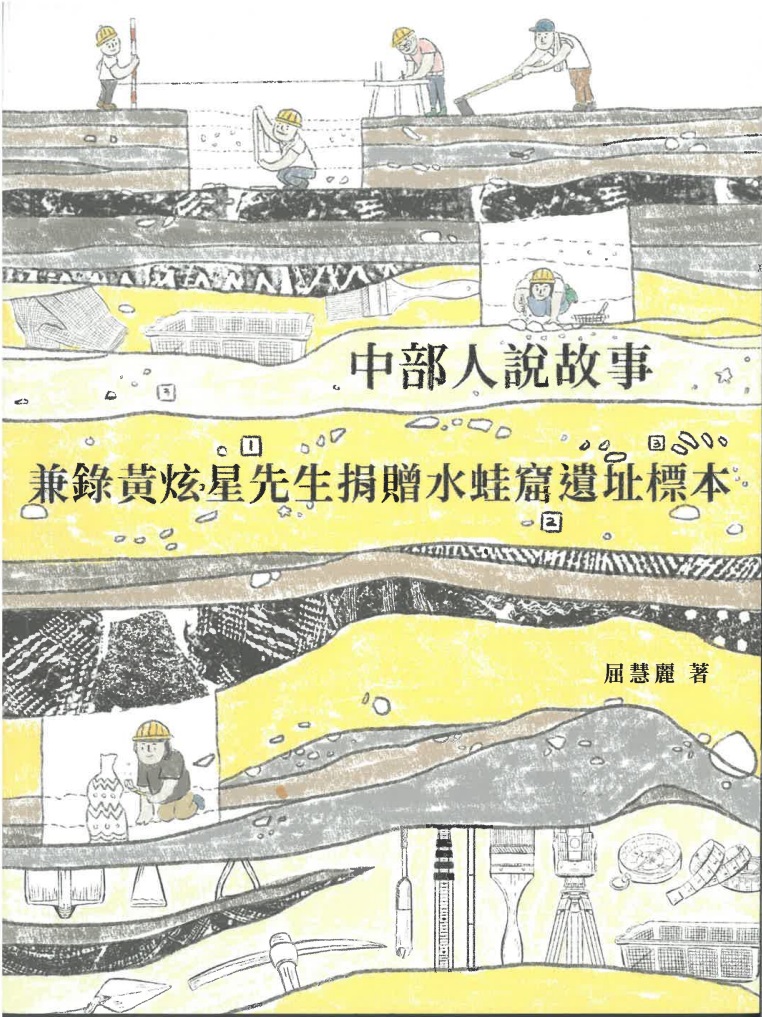
| 中部人說故事--兼錄黃炫星先生捐贈水蛙窟遺址標本
: People from Central Taiwan tell stories—including a record of the specimens from the Water Frog Cave site donated by Mr. Huang Xuanxing.
|
| 屈慧麗 |
西元 2023 年出版
/ NT$400
|
本書為本館人類學組多年在台灣中部考古發掘所獲得的眾多出土標本及遺物進行分析與研究的豐碩成果,此亦是提供更新本館常設展推出《古代人說故事》的重要資料,在展區中還特闢考古文物修復室,期望透過閱讀本書與參觀展區,提供民眾認識考古學研究與環境永續發展。
作者從文化層序與遺址分布闡述生態環境,透過舊石器時代遺跡發掘、建構台灣中部考古史前時代人群、文化特色與發展過程,從了解如何使用考古工具開始,帶領讀者走入台灣中部史前人類的生活環境,看看他們吃些什麼、周遭有哪些動植物、使用何種工具以及如何裝扮自己。此外,黃炫星先生捐贈本館水蛙窟遺址標本,因數量龐大該書僅能精選部分代表性的標本呈現。
This book is the anthropological group of our museum, which has collected unearthed specimens and relics from archaeological excavations in central Taiwan over the years, and has conducted analysis and research. It also provides important data for the permanent exhibition of "Story Telling by the Ancient People." In this exhibition , a special archaeological relic restoration room is also built, hoping to provide the public with understanding of archaeological research and sustainable development of the environment through reading this book and visiting the exhibition.
The author elaborates on the ecological environment through cultural stratigraphy and site distribution, excavates Paleolithic sites, and constructs the characteristics and development process of the population and culture of prehistoric Taiwan in the central region. This journey starts from understanding how to use archaeological tools, leading readers into the living environment of prehistoric humans in central Taiwan. Readers will explore what they ate, the surrounding flora and fauna, the tools they used, and how they adorned themselves. In addition, due to the large number of specimens donated by Mr. Huang Xuanxing from the Shuiwaku site, this book can only select some representative specimens for presentation. |
| 人類學 |
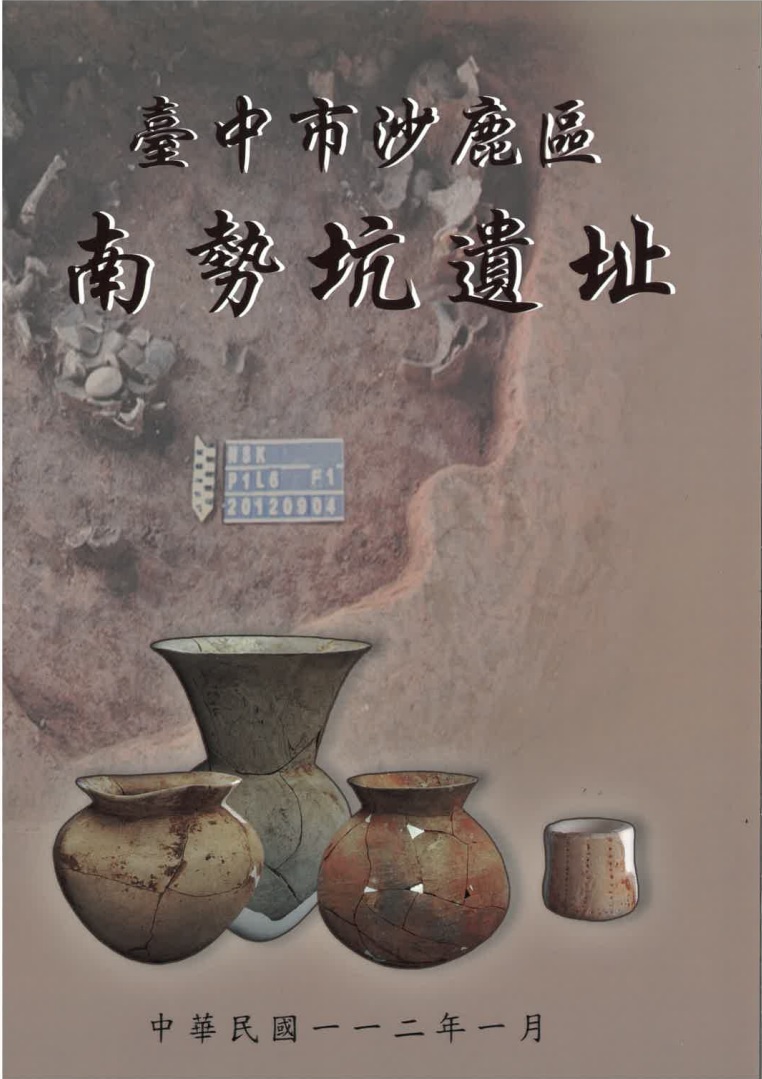
| 臺中市沙鹿區南勢坑遺址
: Nanshikeng Site, Shalu District, Taichung City
|
| 劉克竑;王冠文;李芷綾;鄒瑞楊 |
西元 2023 年出版
/ NT$400
|
本書為國立自然科學博物館人類學組於2005~2015年期間在臺中市沙鹿區南勢坑遺址進行5次的發掘之出土遺物整理分析的成果報告。
南勢坑遺址是一個史前時代的小型聚落,年代距今大約1100〜400年,位置在大肚台地西側的緩坡上,面對清水海岸隆起平原,其居民是平埔族拍布拉族的祖先,以臺灣考古學的文化分類而言,屬於蕃仔園文化鹿寮類型。
南勢坑遺址的考古發掘,發現有數量既多分佈又密集的灰坑,以及大量的陶容器破片、獸骨、貝殼、木炭、玻璃珠、瑪瑙珠、鐵器、陶紡輪等遺物。劉克竑先生的工作團隊透過1年的計畫案重新整理、分析並出版這批珍貴文化資產,以堤供學者研究材料,與社會大眾了解平埔族過往的歷史。
This book presents the excavation, organization, and analysis results of the unearthed artifacts from five excavations conducted by the Anthropology Department of National Museum of Natural Science in Taichung City Shalu District at the Nanshikeng Archaeological Site between 2005 and 2015.
The Nanshikeng site is a prehistoric small settlement dating back approximately 1100 to 400 years ago. It is located on a gentle slope on the west side of a terrace in Dadu District, facing the elevated plain of Qingshui District's coast. The anhabitants are ancestors of the Pingpu people and, in terms of Taiwan's archaeological cultural classification, belong to the Fanziyuan Culture, Luliao Type.
The Nanshikeng site's archaeological excavation uncovered numerous ash pits, as well as a large quantity of pottery fragments, animal bones, shells, charcoal, glass beads, agate beads, iron artifacts, and pottery spinning wheels. Mr. Liu Kehong's team undertook a one-year project to reorganize, analyze, and publish this book, aiming to provide scholars and the general public with insights into the history of the Pingpu people. |
| 科普、自然環境教育 |
| 無界∞鏡相:科學攝影事件簿2020-2021
: Infinite Camera World:Science Images 2020-2021
|
| 楊翎主編 |
西元 2022 年出版
/ NT$500
|
本書是國立自然科學博物館舉辦第六屆及第七屆「科學攝影」比賽得獎作品集結而成。
無界世象,彼是方生; 方生方見,方知方逝。
影無非彼,鏡非有相; 惟視有情,吾相鏡界。
All things in the word are interdependent, complementary and without boundaries. With birth comes the desire for understanding. Birth also signals the start of the journey toward death. Images are not the subjects themselves but as they appear to others. What is seen though the lens may not actually exist. Seeing through the eyes of sentient beings requires a corresponding vision. If free from biases and attachments,we can understand that all things are intertwined.
〜楊翎 Yang Lin |
| 科普、自然環境教育 |
| 鳥類風情畫
|
| 顏重威 |
西元 2022 年出版
/ NT$400
|
這是一本鳥類攝影集,每一張照片都像一則故事或一幅畫,展現各種鳥類的各種不同覓食技巧、求偶方式、育雛護幼,飛行遷徙等生活樣態,這些行為有時讓我們覺得不可思議,有時更讓人讚賞,然而,鳥類的生活常常因為人類的各種建設和日常活動受到改變。作者透過豐富的圖像內容與簡明的文字說明,想將這些發現與大家分享。
This is a collection of bird photographs, each image telling a story or painting, showcasing the diverse foraging techniques, courtship methods, chick-rearing, migratory behavior, and other aspects of life of various birds. These behaviors sometimes seem incredible, and sometimes even admirable. However, the lives of birds are often altered by human construction and daily activities. Through rich visual content and concise text descriptions, the author aims to share these discoveries with everyone. |
| 科普、自然環境教育 |
人工智慧
: 分享大師視野
![Full Text]()
|
| 周文豪編撰 |
西元 2022 年出版
/ NT$免費電子書
|
2017年春季演講系列「Let' go!-分享大師視野」
第一講:「腦的智慧•智慧的腦」-人類仰賴充滿智慧的腦從物種的生存競爭中勝出,而優越智能的極致發揮,便是創造出和我們有著類似表現的「人工智慧」(吳嫻主講)P14。第二講:「美好生活的得力助手-智慧控制」-現代智慧控制對環境操作具備自然適應、自我適應、自我組織及推論等特質,智慧控制的應用是必然的趨勢(林俊良主講)P24。第三講:「從Erica到AlphaGo戰勝棋王之道」-從AlphaGo打敗人類棋王是一個令入驚嘆的時刻,它也代表了人工智慧一個歷史性成就(林順喜主講)P38。第四講:「機器人與智慧健康照護」-在高齡化的全球趨勢下各種健康照護持續增加,機器人的陪伴需求逐漸浮現,然而要滿足該用途的機器人需具有建立自我社會化的能力(傅立成主講)P50。第五講:「迎接下一波工業革命-工業4.0」-「工業4.0」是德國於漢諾威工業展時提出的技術發展策略,將網路技術、軟體技術、物聯網技術、端運算技術技術與巨量資料技術整合的完全數位化的智慧製造生產系統(周至宏主講)P62。第六講:「從石器到機器手臂」-從石器到機器手臂代表人類從原初到今日的大歷史過程,同時也說明心手互動影響的演變,人之所以為人是經過長期演化的並非一蹴可幾(劉益昌主講)P78。第七講:「現代機器人故事之父-艾西莫夫」-1942年艾西莫夫(Asimov Isaac)美國業餘作家發表「機器人學三大法則」採多元的開放心態,想像與預測機器人出現後的未來世界,為機器人科幻小說開創一個新紀元(葉李華主講)P98。第八講:「指數科技,奇點未來」-當年圖靈發明第一台電腦是一整間教室那麼大,過二十年那樣子的機器已經在你的口袋裡面了,看見這樣的變化再想想二十年後的會是怎麼情形,是一種非常好的指數思維的訓練(葛如鈞主講)P104。 |
|